
Cockroach control across Gauteng
Small brown cockroaches in the kitchen at night, dark specks behind the fridge, a musty smell in a cupboard: those are the usual first signs. Ecopoise's registered operators treat cockroaches in homes, restaurants and food plants across Gauteng, with a written 3 months guarantee.
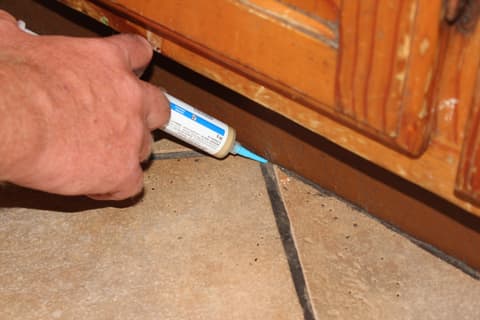
Signs you have cockroaches
- Droppings: dark specks or smears in cupboards, behind appliances and along skirtings.
- Cast skins and egg cases in the same hiding places.
- Stains and an unpleasant smell on surfaces where German cockroaches have been.
- Live or dead cockroaches, mostly at night. By day they hide in warm, dark, damp cracks.
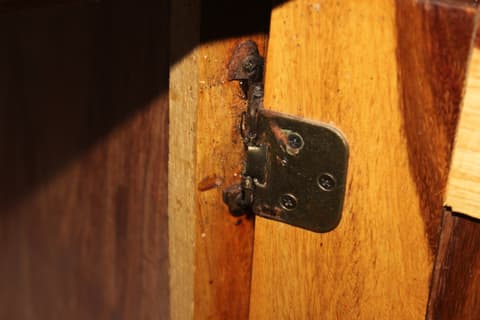
Which cockroach is it?
Four species cause nearly all the trouble worldwide: the German, American, Oriental and brown-banded cockroach. In South African surveys the German cockroach is by far the commonest indoors, with the American and Oriental next.
The German cockroach: the small one in the kitchen
About 13 mm long, light brown, with two dark stripes on the shield behind its head. It lives and breeds entirely indoors, in warm, humid kitchens and bathrooms, and it is the commonest pest cockroach in restaurants, food businesses and hospitals. Each egg case holds about 30 to 40 young, and under good conditions a hatchling is breeding itself within roughly 50 to 60 days, the fastest of all the pest cockroaches. That is why a few become hundreds. An adult hides in a crack about 1.6 mm wide. They spread when people carry them in unknowingly with goods, so look over deliveries and anything that has been in storage before it goes into a kitchen.
In 2023 Professor Clarke Scholtz, formerly head of zoology at the University of Pretoria, called the German cockroach "a problem across the country". Moist summers suit them.
The American cockroach: the big one from the drains
Around 4 to 5 cm, reddish brown, with full wings, though it seldom flies and mostly glides. It lives in sewers, storm drains and water-meter boxes and comes indoors where pipes are damaged or drain traps have dried out. It can squash its body to about half its height and get through a gap of about 3 mm, the height of two stacked coins, and it can carry the bacteria that cause food poisoning, including Salmonella and Shigella.
Oriental and brown-banded cockroaches
The Oriental cockroach is about 3 cm, almost black, and likes cool, dark, damp places such as garages, drains and meter boxes; one female and her offspring can produce nearly 200 cockroaches in a year. The brown-banded cockroach is about 13 mm with light bands across its body; it glues its egg cases to ceilings and under furniture, hides near appliances and behind pictures, and needs less moisture than the others.
-
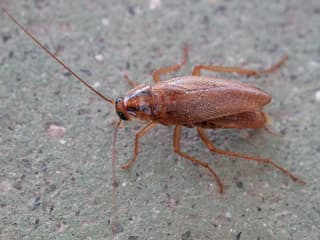 German cockroachBlattella germanicaAbout 13 mm, light brown, two dark stripes on the shield behind the head. The kitchen one.
-
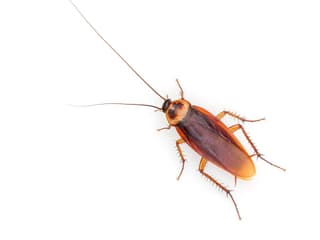 American cockroachPeriplaneta americana4 to 5 cm, reddish brown with a pale margin on the shield behind the head. The drain one.
-
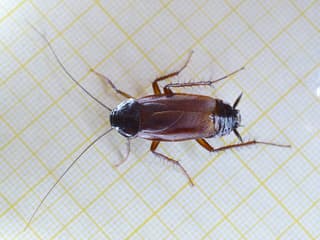 Oriental cockroachBlatta orientalisAbout 3 cm, almost black; cool, dark, damp places. This is a winged male; the females' wings are only stubs.
-
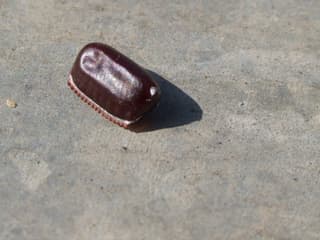 Egg casePeriplaneta americanaAn American cockroach egg case; the female cements it to a protected surface and each holds about 12 to 16 young. The German cockroach carries hers until they hatch.
The photos are a guide, not a diagnosis. Species vary, and a technician on site will confirm which one you have.
Why it matters
- Cockroach droppings and shed skins carry allergens. Indoor infestations are a known risk factor for asthma in children.
- They can carry bacteria onto food, including Salmonella, which causes food poisoning.
- German cockroaches stain surfaces and leave a smell wherever they have been.
- Running a food business? See pest control for your business.
What Ecopoise does
- Registered operators. Registered pest control operators with the Department of Agriculture; certified members of SAPCA and PCFSA.
- A written 3 months guarantee on cockroach treatments.
- The visits. A cockroach treatment is a perimeter spray in the kitchen and bathrooms, where cockroaches hide, plus gel bait in the cupboards and a flush that shows up their hiding places. Because the eggs are protected inside a hard case that a treatment does not reach, a new batch hatches after the first visit; three treatments over three weeks catch each hatch.
- Safety. We do not treat while elderly people, infants or asthma sufferers are on the premises, and they stay away for four hours after the treatment. Birds and fish go outside before we start, and nobody should be handling food during the spray.
- Price. There are no set prices, because the price depends on the size of the area to be treated. Every job is quoted first.
Questions people ask
Why do they keep coming back?
Because the German cockroach breeds faster than it can be swatted. A female carries her egg case of about 30 to 40 young until a day or two before it hatches, the young are adults in roughly 50 to 60 days, and an adult female lives around 200 days. That is why one treatment is never enough: the eggs are protected inside a hard case that a treatment does not reach, so Ecopoise treats three times over three weeks to catch each batch as it hatches.
Where do the big ones come from?
The large reddish-brown American cockroach lives in sewers and storm drains and comes up through damaged pipes and dry drain traps.
Are cockroaches dangerous?
They almost never bite (only in extreme infestations), but they carry bacteria onto food and surfaces, and their droppings and skins are a recognised asthma trigger, especially for children.
Can I just send you a photo?
Yes. Send us a clear photo on WhatsApp. Nine times out of ten we can tell you what it is; when we cannot, we send it to an entomologist. WhatsApp it to 078 900 1536.
Do you guarantee the work?
Yes: 3 months on cockroach treatments, in writing.
Watch: Meet the pest, cockroaches
Three minutes on what a cockroach is, where it hides and why it matters, from Ecopoise's own "Meet the pest" series.
Sources and photo credits
Sources: UC IPM Pest Notes: Cockroaches (Publication 7467, revised 2019); US EPA, Cockroaches and Schools (2019); PDBY, 10 May 2023, quoting Prof. Clarke Scholtz; Jayaram and Full, PNAS, 2016. Ecopoise keeps the full fact bank with every reference.
Identification photos, via Wikimedia Commons, cropped and resized: German cockroach: Lmbuga (CC BY-SA 3.0); American cockroach: Insects Unlocked, University of Texas at Austin (CC0); Oriental cockroach: Dimitǎr Boevski (CC BY-SA 4.0); Egg case: Eran Finkle (CC BY-SA 3.0). The licence names link to the full licence text.


Seen the signs? Call or WhatsApp 078 900 1536
All of Gauteng.